


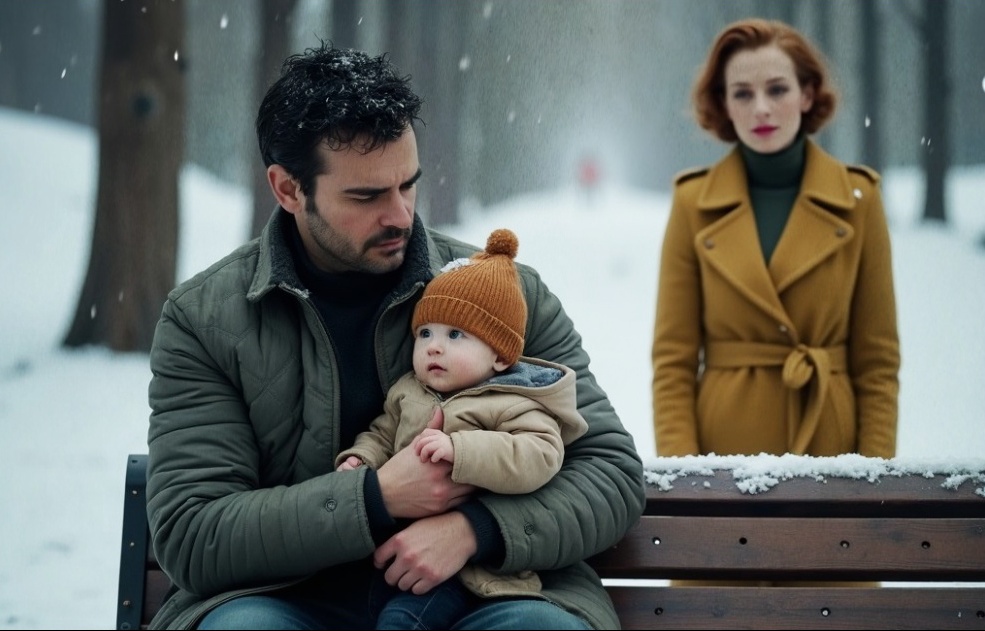

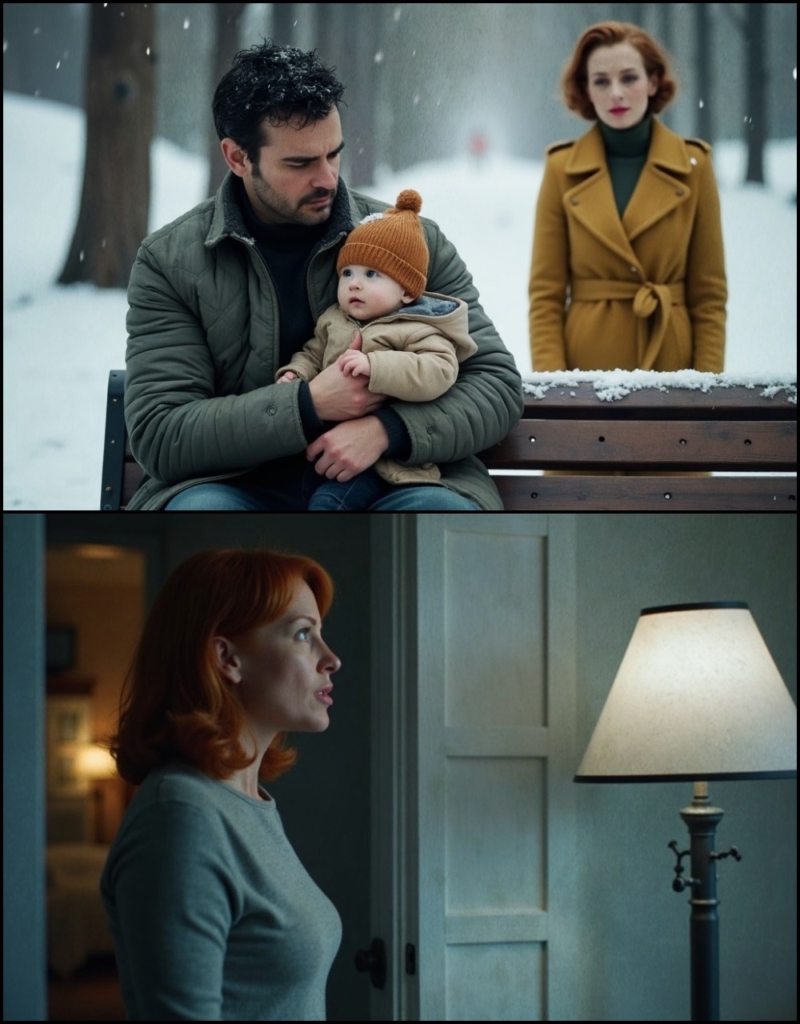
Snow fell in thick flakes, as if the sky were trying to wrap the city in a blanket of oblivion, to hide all human suffering and fatigue from it.
Emily Thompson stopped at the doors of the medical center, clutching a thin envelope in her frozen fingers. Her fingers didn’t tremble; outwardly, she was still composed, as if at a presentation or a board meeting.
But somewhere deep inside, behind the facade of strength and control, a quiet panic had begun. In this envelope, amid the cold medical terminology, hid her sentence—glioblastoma, stage four. That was it. Game over.
She stepped forward, but her legs felt like stone. The wind, vicious and biting, whipped around the corner, lashed her face, tangled in her hair, tugged at her coat collar.
But Emily didn’t flinch. No fear, no pain, no cold. In her head, where business ideas, logistics, and exchange rates usually swarmed, there was only one sound—a monotonous, viscous hum.
An internal echo: the end. The snow merged with the wet asphalt, seeping under the soles of her designer boots, staining them, leaving salty streaks. Once, she would have hated that.
Once, she might have reprimanded her assistant for such a walk in the freezing cold. Now—she couldn’t care less. The sky blended with the city in a gray haze.
Tree branches, like an old woman’s fingers, bony and twisted, reached upward, as if begging for mercy. Emily looked at them and felt a strange connection between these trees and herself, between their silent pain and what had settled inside her. Her whole body, once strong, agile, enduring, now felt like a fragile structure on the brink of collapse.
People passed by, with bags, in headphones, with children, with dogs. Each had their own destination. She had none.
No plans, no meetings, no tomorrow. Only the diagnosis in the envelope, burning through her coat pocket. She slowed her step by the window of a toy store, where a plastic Santa Claus waved his hand, and artificial snow fell in a closed loop.
Once, such things would have elicited a slight smirk from her; now—a bitter irony. Who would celebrate Christmas with her now? Who even knew she was still alive? The headquarters on the 32nd floor, her name on the Forbes list, a personal chef, an art collection—all of it seemed not like wealth, but artifacts of someone else’s illusory life. A bus passed by, splashing her up to her calves with dirty slush.
She didn’t turn around. Didn’t get indignant. It no longer mattered.
In this new, terrifying simplicity of what was happening, everything became superfluous: numbers, clothes, even her own name. When she reached a small park, her legs slowed on their own. There, on a bench under a streetlamp, as if part of the urban scenery, sat a man with a child.
He held the boy close, as if he could shield him from all the evil in the world. Snow had already blanketed their shoulders, covered their hair, their cheekbones. They almost blended into the landscape, like two living snowdrifts.
But Emily immediately understood: they weren’t sleeping. They were just waiting. The boy was no more than six, his face sharp, nose red, eyes huge and anxious despite the fatigue.
His mitten dangled on a string, like a child’s illusion of protection slipping away. The man looked even more exhausted. Stubble, chapped lips, a gaze with more pain than words.
Both were dressed in thin jackets, not suited for such cold. Emily approached without thinking what she would say. Something inside her contracted, some fragile, long-forgotten feeling came alive again.
She stopped in front of them, as if checking reality. You can’t sit here like this, her voice sounded unexpectedly quiet. The child—he’ll freeze.
The man slowly turned his head. His gaze wasn’t hostile. There was something else: fatigue, detachment, and just a little dignity that hadn’t yet left.
Where else can we go? he asked hoarsely. Emily swallowed. How many times had she asked herself that question in her head over the last forty minutes.
Home? she murmured, already knowing the answer. He smirked, bitterly, without malice. We had a home.
But no more. Now only here. The child was silent.
He didn’t hide, didn’t cling to his father, just sat, staring ahead, as if accustomed to only cold and silence around him. What’s his name? Ethan. And I’m Michael.
How long have you been here? Since yesterday. We looked for a shelter first.
But with a child, without papers. They won’t take us. They don’t even want to look….
Emily suddenly felt a wave of anger surge through her body. Not just at the system, not just at the rules she herself had considered logical for many years. But at herself, for years of blindness.
For not noticing people like them. Just passing by. And yet, not so long ago, before all this luxury, she too had once sat alone in a cold dorm room with a heater and a pack of noodles.
Come with me, she said quietly. I have a warm place. Tea.
And a blanket. You need to warm up. The boy, especially.
Michael didn’t answer right away. He looked at his son. The boy nodded slightly, as if he were the one deciding.
Only then did the father slowly rise, carefully holding the child close. The boy weighed almost nothing. Too light for his age.
Emily stepped forward. Extended her hand. Not like a business partner.
Not like a director. Just like a person. And for the first time in many years, someone touched her not out of politeness, not by position, but out of trust.
They walked together. The snow covered their tracks, as if trying to hide this meeting from the whole world. Michael struggled to move his legs, not from the cold, but from exhaustion.
He hadn’t felt support under his feet for a long time, didn’t believe in help, let alone in goodwill from a woman whose appearance clearly said she was from a world he no longer belonged to. Her coat cost more than his entire life over the last year. But in her gaze, there was no contempt, no pity, only firm intent.
It frightened and attracted him at the same time. Ethan, clinging to his father, buried his nose in his neck. His lips were blue, his breathing ragged.
But he didn’t complain. He never complained. Michael still remembered how Ethan asked not to turn on the light in the room when the money for electricity ran out, and how he brought bread from school because the teacher gave it.
All that seemed like another life, one where they still tried to cope on their own. Emily walked a little ahead, and each of her steps sounded different, even, confident. There were no slippery doubts under her heels.
And Michael, not knowing why, suddenly remembered how in childhood he watched his mother going to work, in a black coat and polished boots. He thought then that women who walk confidently can do everything. Even stop time.
The silence between them wasn’t awkward. It was dense, saturated. Each thought their own thoughts.
Emily suddenly remembered her first apartment. A small one, in an old building, with peeling walls and the smell of boiled cabbage in the hallway. There was nothing there but an old sofa, a table, and a view of a brick wall.
But it was there that she first felt she was living alone. That no one would come and save her. She herself, period.
The parking lot near her house was empty. She called the housekeeper, ordered her to prepare the guest room, put out blankets, turn on the heater. Didn’t ask why.
Just do it. Usually, Laura asked clarifying questions, but now she silently nodded over the phone. The mistress’s voice sounded different.
Emily led Michael and Ethan into the warm space. The spacious hall greeted them with the aroma of cinnamon and vanilla, smelling of baking. Ethan lifted his head, sniffed, and something in his face twitched—a hope, almost forgotten.
Michael looked around, as if fearing a trap. Here you can stay, said Emily, trying to speak casually so as not to scare them off. For a while.
Until we figure out what next. Are you hungry? No answer followed. She already knew they weren’t just hungry; they had been starving for a long time.
And it was no longer physiology, but a state of the soul. Hunger for warmth, protection, for someone to simply say: I’m here. Go to the kitchen, she added.
There’s food. A shower. Clean towels.
Michael stood as if pressed against the wall, unbelieving. Why are you doing this? She looked at him. Deeply, attentively.
And said almost in a whisper: Because today I also learned that I have no afterward. Michael pressed his lips.
He didn’t know what to say. Next to him stood Ethan, pressed against him, looking at Emily the way children look at a kind sorceress. Without delight.
With hope. They followed her. The kitchen was huge, bright, with a long table where bowls of soup, bread, tea already stood.
Laura, seeing the man and child, assessed everything with one glance, one of those that replace a medical chart. She said nothing, only nodded. Ethan stood at first, unbelieving.
Then Michael whispered: Eat. And the boy carefully, slowly, began to eat.
Without greed, neatly, as if afraid he’d be punished for it. Laura watched him from the corner of her eye; her eyes moistened. The hot shower is through that door, she said quietly to Michael.
You should warm up. I’ll find some clothes. My husband left some things before.
Michael nodded. His movements were slow, like those of a person for whom exhaustion had become habitual. He went to the bathroom, and Ethan stayed in the kitchen. Emily knelt down next to him.
How do you feel? Warm, the boy answered, not taking his eyes off the plate. It smells here like in the cartoon about winter.
About winter? Where the wolf found a home, and they gave him porridge, he explained with importance.
She nodded. And felt something in her chest loosen. As if there was a room inside that finally let in light.
When Michael returned, dressed in clean, slightly oversized but warm clothes, he looked younger. His hair was still damp, his face confused. As if his body had warmed up, but his soul hadn’t yet.
You need a room. The heater is already on. Come on.
She led them upstairs. The guest bedroom turned out to be unexpectedly cozy. There was a large bed, two armchairs, a blanket, and a nightlight with soft light.
Emily placed a basket with dry clothes by the door, silently left, and closed it behind her. Going downstairs, she poured herself tea and looked out the window. The snow didn’t stop.
The window sill glass was fogged up. She ran her finger over it and, without thinking, wrote «Not the end yet.» The night was quiet.
No wind, no sounds from the street, as if the city itself had frozen, trying not to disturb someone’s fragile peace. In the guest bedroom, under the soft light of the nightlight, Ethan, curled up, was already asleep. His cheeks had pinked, his breathing became calm, even.
He lay on his right side, hugging the pillow like a teddy bear he never had. Michael couldn’t sleep. He sat in the armchair by the window, looking at the snowy yard…
He felt something returning that had long disappeared—warmth. Not physical, not from the heater, but some internal, elusive one. But behind this feeling hid anxiety: it couldn’t be that all this was just like that.
Without conditions. Without consequences. He remembered how in his youth he helped his mother sell pies at the subway.
How he carried crates, stealthily hid money in his belt to secretly buy himself an old MP3 player. How he dreamed of becoming an actor, then a literature teacher. And became nothing.
A contractor without steady income, a father without stability, a person whom all friends crossed out as soon as he started needing. And now he sat in an armchair in a house that resembled a five-star hotel, hearing his son’s quiet breathing, sleeping in silence. It was too…
Too good to last long. At dawn, he fell into a half-sleep, not from fatigue, but from weariness. He woke up to the smell of coffee.
At first, he thought it was a dream again. But the smell became clearer. Then the creak of the door and Laura’s voice.
Breakfast is on the table. Is the child still sleeping? Her voice was strict, but there was something homely in it, almost caring. Yes, Michael stretched.
Thank you. It’s not me, she cut off. It’s Emily Thompson.
Her decision. I’m just the executor. He nodded, not knowing what to answer.
After washing and changing into the same clothes, he carefully woke Ethan. The boy opened his eyes, rubbed them with his fists, and smiled, a bit embarrassed, like children smile when they realize they don’t have to return to the nightmare yet. The kitchen awaited them with a set table, like in a cafe.
Porridge with jam, fresh buns, tea, apples. Michael looked around embarrassed, wanted to say something, but couldn’t. Ethan was already sitting, looking at the food with that expression that sticks for life: a mix of hunger, gratitude, and cautious faith.
Can I? he whispered. Of course you can, said Michael. Wash your hands first.
Ethan jumped up as if on command. And Michael noticed, in these simple gestures, in how the boy wiped his hands on the towel, how he straightened the napkin on his knees, lived the memory of normal life. Of the one they had almost lost.
Or maybe it was still somewhere nearby. Emily appeared closer to nine. Without makeup, in a soft cashmere sweater and wide pants.
Not like an empire, but like a person. She looked into the kitchen and saw them at breakfast. Ethan, noticing her, stood up, as if afraid he had to leave.
It’s okay, she said, smiling. Eat calmly. Michael stood up.
Thank you. I don’t know how… No need for words, she interrupted. Just eat.
It’s breakfast, not a deal. He fell silent, sat down, lowering his eyes. This woman threw him off his usual axis.
In her tone, there was nothing he was used to from people in her position: no patronage, no contempt. Only evenness. As if she didn’t notice at all that before her was a beggar with a child who didn’t even have his own socks.
After breakfast, she suggested they walk in the garden. The snow had stopped, the air became fresh, with a light frost. Michael refused at first: inconvenient, shameful.
But Ethan grabbed his hand. Dad, please. I want to see.
They went out into the garden. Emily walked beside but a little aside, leaving space. Ethan ran along the paths, trampling the snow, exclaiming when he found squirrel tracks by the gazebo.
Michael was silent, walked slowly, as if not believing it was all not a play, not a dream. He has light in his eyes, Emily said quietly, catching up to him. You’re a good father.
What kind of one! he smirked bitterly. No home, no money. I couldn’t even protect him from… He fell silent.
From the world? she finished. From myself, he muttered. From mistakes? From poverty? From everything? They approached a bench, sat down.
Ethan raced along the path, leaving a chain of tracks. And I thought I had everything, she said, until yesterday I learned I had nothing. Michael looked at her.
In her eyes was something tired and, at the same time, alive. You have a son, she added. And I only had business.
Sleepless nights, charts, numbers. And not a single person I could call just like that. And what now? She smiled slightly.
Now I want to spend what’s left a little differently. In their gazes, something common intersected: not pity, not romance, but recognition. Like two drowning people who surfaced for a moment and met eyes.
We won’t stay with you long, Michael said quietly. I’ll find work. Rent a room.
I don’t want to be a burden. You’re not a burden, Emily answered firmly. Sometimes people just need a little warmth to become themselves again.
Michael nodded, but inside there was still a voice whispering «This is too good to last long.» Laura for the first time in many years allowed herself to sit in an armchair before noon. Usually by this time she had polished the floor three times, recounted pillows, and hurried the cook, who wasn’t in the house.
But today she sat in the living room and watched the strange pair: a man with a tired but honest face, and his son, whose every look said «I want to live like everyone else.» Michael helped Ethan put on mittens, listened to his stories about the squirrel and the old tree, under which, in the boy’s opinion, winter fairies lived. He laughed himself, sincerely, as if there was no grief, no shame nearby.
Only this morning. Only the two of them. Laura watched them, arms crossed on her chest.
And suddenly said: You know, he believes you. Michael turned around.
Who? Ethan? He. And she. Laura nodded toward the office, where behind the glass partition Emily moved, talking on the phone.
She doesn’t bring strangers into the house. Never. Doesn’t even let old friends into this part of the mansion.
And she let you in? Michael wanted to answer something, but couldn’t. His throat dried up. Just think about it, the woman added and left the room, leaving behind a trail of fresh bread aroma and a tiny, almost imperceptible faith that not everything in this world is lost…
After lunch, Emily locked herself in her office. The wooden door clicked softly, cutting off the world with its voices, smells of food, and child’s laughter. Inside was dimness.
Only the desk lamp cast a narrow light on the sheets with analyses, printouts with the diagnosis, MRI scans—all that now replaced her calendar. There were no months, no years. Only metastases.
Only progression. She felt no pain. Only some cold detachment.
As if the disease had etched out not cells, but meaning. Everything she had strived for suddenly turned into useless awards. Gold watches.
Thank-you letters. Photos at the presidium, at the entrepreneurs’ forum. She looked at her reflection in the cabinet glass: pale, but still beautiful.
A woman who could have fallen in love but never allowed it. On the nightstand lay an old photograph. A little girl with two braids, hugging a man in military uniform.
Father. He died when Emily was seven. And since then, she did everything herself.
No one asked what she wanted; she asked herself. What can I do? And answered: everything. And now? Could she cope with what couldn’t be defeated? In the evening, when Ethan was already asleep, curled under the new blanket, Emily entered the living room, where Michael sat with a mug of tea.
He stood up. Do you need something? I need to understand why you’re still here, she smirked, sitting opposite.
You asked us to stay. But you don’t seem like those who just accept help. More like those who run from it.
Michael nodded. You’re right. All my life I thought I could handle it myself.
That a man should pull himself up by his hair, like Baron Munchausen. Then it turned out the hair had fallen out, and the swamp only got deeper…
He fell silent. She didn’t interrupt. Only looked, head slightly tilted.
I worked as a builder. Small contracts, private homes. Then the client fled, left a debt.
Accounts were frozen. Wife… He swallowed.
Wife died from a blood clot. In two weeks. I didn’t even have time to say goodbye to her in the hospital with my son; they didn’t let us in because it wasn’t allowed.
Emily placed her hand on the table, closer to him, but didn’t touch. After her death, I tried to put everything together, collect life piece by piece. But the harder I tried, the more it crumbled.
One day they took the apartment. Simply, based on a loan debt. I didn’t know she had taken it.
She wanted to help me buy a machine. Everything went to hell. Why didn’t you seek help? To whom? His eyes flashed.
Those I considered friends disappeared. Relatives? Everyone has their own families, their own children. No one needs the poor, especially with a child.
Emily nodded. Slowly. Without words.
She knew that feeling—of being unnecessary. Only hers was different. You’re kind of needed by everyone, but no one is interested in you for real.
As soon as you stop being useful, that’s it. You’re just a shadow. I just don’t want Ethan to live thinking his father is a loser, said Michael.
He’s the only thing I have left. And I’ll do everything to give him a childhood. At least some kind.
She looked at him with new respect. Not pity, precisely respect. Before her sat a man who had gone through hell but hadn’t become bitter.
Remained honest. And warm. You know, she said, looking into the cup, I saw myself in you.
Only in reverse. You lost everything and remained human. And I had everything but stopped being alive.
Michael didn’t know what to answer. So he simply said: Thank you.
For letting us in. It’s you who let me in, she answered unexpectedly. Into your truth.
Into reality. Into what I hid for years behind success. They fell silent.
The room was quiet. Only the clock ticked, measuring time, of which both had less than others. The first days in Emily’s house became for Michael and Ethan something like rehabilitation, not physical, but emotional.
As if someone pressed pause in a movie where they were always running away, and now they could just breathe. Ethan gradually stopped flinching at sharp sounds, got used to silence without threat. He began to play, laugh, and even sing under his breath.
But Michael felt anxiety returning with each day. Neither fresh bread in the mornings, nor a warm bed, nor even quiet evenings on the veranda, where Ethan drew snowmen on fogged windows, saved him from it. Anxiety whispered: you’re here temporarily.
You’re an error in her system. And soon you’ll be corrected. He understood he couldn’t live at someone else’s expense.
This conviction had grown too deep in him: if you don’t provide for yourself, you disappear. So on the fourth day, he started looking for work. At breakfast, he apologized to Emily and went out into the icy city, into the gray funnel of vacancies, where people without connections, without a suit, but with a five-year-old son were needed by no one.
He went into cafes, offered to clean. In auto shops, asked to be an assistant. Walked around construction sites, even supermarkets.
Everywhere—the same look. Some said directly: you don’t fit us, some apologized: we’re all full. One administrator even looked at him like a bum and handed him 50 dollars.
Michael turned and left without taking it. Returning to the mansion each time became harder. He didn’t know what to say to Emily.
In the evenings, sitting in the living room with a cup of tea, he told Ethan fairy tales, pretending everything was fine. But his eyes gave him away. And Laura saw it.
And Emily—felt it. Meanwhile, her well-being began to fail. Not sharply, not dramatically, slyly and stealthily.
First—weakness. Then—dizziness. In a few days, she caught herself unable to read a paragraph without pausing.
Her head buzzed, as if someone had set a generator. She attributed it to fatigue. To the weather…
But somewhere inside, she understood—it had begun. One evening, returning from the doctor, Emily found Michael in the yard. He was clearing snow from the path, wrapped in her old down jacket, shovel in hand, face where stubbornness fought despair.
Seeing her, he straightened, wiping his forehead. Looking for work, he said shortly, as if justifying himself. Without documents, they don’t take…
I applied for restoration; they were with us that night. Apparently, stolen while we slept. I didn’t realize right away.
Emily nodded. Silent. Just looked.
We’ll leave soon, he continued. I don’t want you… to spend resources on us. It’s wrong.
You’ve already done too much. Are you ready to die from righteousness? she asked sharply. Or make your son live in an alley out of pride? Michael lowered his eyes.
She came closer. Tomorrow they’ll call you back. I connected acquaintances.
Documents will be done faster. Ethan needs to go back to school. He needs a future, understand? He nodded, not raising his gaze.
At that moment, he felt both saved and broken. As if someone took his broken wheel and replaced it with a new one, and he was still trying to roll on the old route. That same evening, she opened her laptop.
For the first time in recent weeks, she looked into work documents. Her deputy, young ambitious Olivia, had written to her recently: chaos in the supply department. We need someone who can negotiate on construction sites, who knows the real procurement system, not by theory.
We need a live person with field experience behind them. She looked at that line like a sign. A live person with field experience behind them—that was Michael.
He was exactly what her company always lacked. Not a sales manager with an MBA, but a person who could set up a process from scratch, get a discount, negotiate with a crew, and not lose face. And importantly, he would never accept charity.
He would work. And Emily pondered. To lift him from scratch—not in the sense of giving a job, but to restore faith in himself.
Maybe that was the point? To nurture not only the child, but the man capable of becoming himself again. Not for romance. For justice.
Laura, entering with a tray, found her at the laptop. Something happened? Thinking, said Emily, looking at the screen. I may have found the person I’ve been unable to find for years.
This about Michael? Yes. Only he doesn’t know it yet. They exchanged glances.
And in that silent exchange was a whole world: with past, fears, hopes. And behind the wall slept a boy who again began to dream not of snow and cold, but of school, friends, and big sneakers he would grow into. In the hallway, the light flickered, a slight power surge, like a heart spasm in an old house.
Emily, standing by the window with phone in hand, automatically glanced at the ceiling but immediately looked away. It wasn’t the electrician worrying her now. On the phone screen flashed a message from her old acquaintance, a lawyer with access to registry archives.
The answer was short, almost dry, but it squeezed her chest. Michael David Harris. Born in 1983.
Mother, Harris Ingrid Thompson. Connection to your grandmother on father’s side confirmed. Second cousin.
The world didn’t collapse. But swayed. As if what she felt subconsciously—his gaze, his gestures, even the timbre of his voice—suddenly took shape.
He, her family. Distant, almost stranger, but still. Blood.
And somehow it became scary. Because if he finds out, everything changes. Maybe he’ll leave.
Or conversely, stay, but not the same. And for now, he was just Michael. A person she helped.
And who, strangely, helped her return to life. The documents were delayed. Despite connections, speeding it up didn’t work as quickly as wanted.
Bureaucracy, like a living organism, resisted interference. At some point, there was even suspicion someone was deliberately putting spokes in the wheels. Michael was nervous, called, wrote, went to the immigration service himself, without escort, though Emily offered to send an assistant.
I have to do this myself, he answered stubbornly. It’s my duty. Sometimes he returned irritated, gloomy, silent.
On such evenings, Ethan sat nearby, pressed his shoulder, and Michael began telling stories. Not about miracles, not about heroes, but about how a stubborn tractor driver in one village didn’t let a snowstorm swallow the whole settlement. Or how a builder saved a kitten from the fifth floor…
These tales were simple, almost everyday, but in them someone always saved, not because they had to, but because they couldn’t otherwise. Emily on such evenings watched them from the shadows. And felt something inside her warm, making her want to cry and laugh.
And then cry again. Michael became not just close to her. He seemed to pull out of her that part she had buried even before forty, when she decided being strong was more important than being alive.
When the documents were finally ready, and Michael received his ID, Ethan’s birth certificate, and temporary registration, he returned home looking like he had won a marathon. His eyes burned with determination, his shoulders had a resilient straight line, his voice clearer. We did it, he announced at the threshold.
All set, Ethan goes to school. Tomorrow I’ll submit the application. And I—I’m ready for work.
Emily listened as he spoke, as he smiled, and in her head formed a thought that had been ripening the last days. I have a proposal for you, she said when Ethan ran to the kitchen for pies. I want you to try yourself with us.
In the supply department. Problem area. But I’m sure you’ll handle it.
Michael froze. In your company? Yes. I already said, you’re the one who knows reality, not just its presentations.
We need such a person. And don’t think it’s mercy. It’s benefit.
Mutual. He looked at her and for the first time didn’t see a benefactor. Saw a partner.
Equal. Thank you, he said quietly. I won’t let you down.
The first day at the new job was for Michael almost like a parachute jump. He entered the office where everyone knew each other, and they looked at him like a stranger. Came through connections, read in the gazes.
But he didn’t let it break him. From the first minutes, he dove in, studied contracts, compared prices, reviewed old supply schemes. Already the next day, he suggested optimizing one route, saving the company tens of thousands.
In a week, he established dialogue with a crew that was missing deadlines. With each day, he felt more confident in place. And with each day, Ethan became happier.
He made friends in class, a favorite teacher, even a robotics club. In the evenings, he enthusiastically told how he assembled a programmable car, and Michael listened with pride, as if it were about launching a satellite. Emily, meanwhile, withdrew more into herself….
Outwardly—calm, work, smile. But in the mornings, it became hard to get up. Sometimes with a sharp movement, darkness before her eyes.
Her medical file lay in the top drawer, but she didn’t open it, as if the paper could destroy the illusion that everything was normal. Michael saw how she paled. Once he even suggested.
Maybe you should rest? I’ll manage. She brushed it off. While there’s strength, need to live.
Later it’ll be too late. He didn’t understand. But remembered the phrase.
One evening, when Ethan was already asleep, Michael entered the library. Emily sat with a glass of wine, looking into the fireplace. Thank you, he said.
For everything. Not just the job. For giving us back life.
She was silent for a long time. Then turned to him. In her eyes was something strange, like a person who made a decision but couldn’t voice it.
And if you learned that all this—is not accidental? That you appeared in my life not just like that? He froze. What do you mean? She turned away to the fire. Nothing yet.
Just imagine someone knows more about you than you yourself. And keeps it to themselves. Would you forgive? Michael didn’t know what to answer.
Depends on the reason, he said slowly. If done out of fear, maybe. If out of love, definitely.
They fell silent. And outside the window, snow fell again, not the one that scares, but the one that covers the earth like a blanket. And in this silence was something important.
That changes everything. Forever. The last weeks flowed like honey in frost: slowly, viscous, as if each minute was pulled from the calendar and placed separately to examine from all sides.
In the house, where silence of the hall and cold glass gleam once reigned, now sounded footsteps, laughter, clatter of dishes, child’s remarks, jingle of keys, and sometimes a lively, almost homely «you want tea?». And all this seemed to try to reclaim from Emily her pain, the intrusive knowledge of her own sentence. Michael and Ethan firmly entered her routine.
In the morning—coffee for three, with crumbling pastries and Ethan’s school stories. During the day—work, where Michael gradually turned into an indispensable employee. In the evening—fireplace, tea, sometimes—wine…
But in this coziness was what Emily feared more than death—closeness. She caught herself with a gaze lingering on his hand. On his voice, which began to appear in her dreams.
On his laughter, which for the first time in many years echoed inside her with something more than an echo. Michael felt it too. He didn’t speak, but in his actions, in care, in silent presence was something more.
He noticed when she got tired. Handed a blanket, placed a cup closer, didn’t ask extra. And she feared that one day he would speak aloud.
Because she already knew: this feeling is wrong. She sat in her bedroom holding that very certificate she had avoided so long. The doctor at the appointment no longer masked his gaze, spoke harshly.
Progression. Surgery impossible. Only supportive therapy.
You need to prepare. Prepare? For what—for dying? For the moment when breath slips like a sheet from the bed? For writing a will? Emily put the paper back in the drawer, as if trying to hide a monster under the bed. But it didn’t disappear.
That night she slept poorly. And at dawn made a decision: not to hide. Not to conceal from what’s happening.
And to spend the remaining not in hospital, not in solitude, but with those who became close to her. Even if it hurts. Even if it’s wrong.
You want to go on vacation? Michael was surprised when she said it in the kitchen. Not just vacation. I want to show Ethan something big.
Something beautiful. Something he’ll remember forever. Egypt? Egypt.
Sand, pyramids, sea. We dreamed of it in childhood, right? Michael laughed. I dreamed of digging in sand, and ended up digging trenches.
So it’s time to make up for it, she smiled. I already talked to the travel agent. We’ll organize everything.
Flight in five days. Laura coming? Of course. Who’ll carry the suitcases? Michael fell silent…
He felt something special in this trip. But didn’t ask. She didn’t want to say, means not time.
While packing, Emily caught moments like frames from a favorite movie. Ethan tried on swimming goggles and laughed, looking in the mirror. Michael chose shorts and winced.
I look like a tourist in Panama from the nineties. Laura packed a first-aid kit, as if preparing not for rest, but survival in the desert. Each of them, without knowing, felt something changing.
The night before the flight, Emily didn’t sleep. She opened an old album, the one with photos from childhood. In one—her grandmother with a little boy in arms.
The signature faded, but she already knew—it was Michael’s mother. And now everything became clearer. That resemblance she earlier attributed to chance.
That warm feeling that seemed like infatuation turned out to be something else: deeper, more tangled. It was blood connection. And it made everything unbearably complicated.
How to tell him? How not to destroy what finally became real? And if not tell, it would be a lie. Living with it—also wrong. In the room’s darkness, she pressed the old photo to her chest and whispered.
Forgive me. For not knowing. For feeling.
And for what I can’t. The next morning, for the first time in many years, she left the house not in a coat, not in a suit, but in a light windbreaker and with a backpack. Looking like a woman whose luggage held not clothes, but last chances.
The airport met them with bustle, coffee smell, and shimmering board. Ethan ran between suitcases, admiring planes in delight. Michael watched.
Laura, grumbling, handed out wet wipes. Emily walked a bit aside, peering into people’s faces, as if trying to remember everything. When the plane took off, she closed her eyes.
Her fingers trembled. Michael touched her hand. Everything okay.
She squeezed his palm. For now yes. And inside sounded the thought: if only there’s time to say everything…
And say goodbye for real. Egypt met them like a gentle wave, as if someone opened gates to another world. One without gray weekdays, cold streets, and a diagnosis like a stamp in a passport.
The sea sparkled like a glass mirror, sand crunched underfoot, air smelled of salt and freedom. Emily, standing on the hotel balcony, looked into the distance, at the horizon that seemed endless. There were no boundaries.
And no time either. Michael and Ethan frolicked in the pool. The boy shouted in delight, Michael laughed as if shedding all past years from his shoulders.
Laura sat in a lounge chair and pulled on glasses, looking like a person to whom all this was long due by status, only issued late. You must try the coconut cocktail, said Michael, handing Emily a glass. You’ve never been on vacation your whole life.
Enough living like a tank. And how do you know how I lived? I listened. Noticed.
Compared to myself. She took the cocktail. Took a sip.
And for the first time in many years laughed not out of politeness, not from awkwardness, for real. Tank, you say—stubborn, indestructible. But even tanks run out of fuel.
And you’re not armored, Emily. You’re alive. He rarely called her by name.
And Emily—first time at all. Something inside her trembled. And it wasn’t the heart.
It was guilt. They went on excursions, rode camels, drank tea with Bedouins. Ethan collected pebbles, sunburned his nose, and began squinting like a little captain.
Michael photographed everyone, as if wanting to preserve this mirage forever. Emily tried to absorb every moment—the ocean smell, hot wind, sand touch. All this was like a last toast at a farewell party, when you already understand: soon the end.
On the third evening, Michael invited her to the hotel roof. Underfoot—resort lights, overhead—stars, clear as an engraving. I must tell you something, he began, not looking in her face.
I know it might be stupid. But if not now, later it’ll be too late. She held her breath.
Already knew what he’d say. And she wanted to disappear right now. Erase herself with an eraser from this frame.
I love you, Emily. And not as a grateful person. And not because of salvation.
But simply, as a man is drawn to a woman. This has long not been about circumstances. This is me. She was silent.
He shifted his gaze, finally daring to see her reaction. But in her eyes was no answer. Only pain.
Such that couldn’t be covered with words. Forgive me, she said quietly. But it’s impossible.
Why? he whispered. Are you married? Is there someone else? She shook her head.
You’re my nephew, Michael. He didn’t understand right away. What? We’re relatives.
Through father’s line. I found out when we started processing documents. I didn’t want to.
But when it became clear, I couldn’t not help you. Couldn’t leave. But now you must understand: it can’t be like that…
He sat down, head lowered. And was silent for a long time. A light wind ruffled his hair, stars twinkled, as if ironic over their drama.
I didn’t know, he finally exhaled. Then why did you keep silent all this time? Because I wanted to believe that love isn’t always about the body. That you can be close without crossing boundaries.
But seems I ruined everything. No, he said, standing up. It’s not you.
It’s life. It doesn’t ask if it’s convenient for us. The next morning, Emily suggested.
Let’s go skydiving. You dreamed of it? Me? You told how in youth you dreamed, but no money. Consider it your chance.
And you? And I was always a coward. But you know, time has come.
To do at least once what scares you to death. Laura threw up her hands hearing where they were going. Are you in your right mind?…
You barely agreed to a massage. Emily Thompson, you can’t have overloads, can’t have stress. Laura, she answered softly.
And can I live? The airfield smelled of hot asphalt and gasoline. Instructors spoke quickly, explained, showed. Michael checked straps, Ethan waved from the ground.
Emily stood calmly. Calmer than all. You sure? asked Michael, looking into her eyes.
Absolutely. We live once. They rose into the sky.
Underfoot—desert, roads stretched in strips, dusty quarters, sea open to the horizon. Emily felt her heart pounding. Not from fear.
From realization: she’s here. Now. In the sky.
On the edge. They jumped almost simultaneously, in tandem with instructors. Michael flew like a bird, shouted in delight.
Wind hit the face, earth approached. Everything was like in a movie. Then—a scream.
He didn’t make out whose. Turned. And saw—Emily’s parachute canopy didn’t open.
The second—too. Instructor pulled the ring. Panic.
Seconds. They fell. Like in a silent film, without sound.
Only wind. Only sky, torn to pieces. Michael yelled.
No. But it was already too late. She fell, as if not a body, but light.
And the light faded. Screams, fuss, sirens. Flashes of blue lights, running on the beach, confused tourists, roll call of names—all this became like noise behind glass.
Michael stood, squeezing Ethan’s shoulder, and watched as two men in uniform zipped two bodies into dense black bags on stretchers. He didn’t cry. His eyes were dry, like the scorching sand underfoot.
Only his heart hummed like a huge pipe, low, dull, tearing the chest from inside. Laura argued with someone from the airfield administration, demanded a translator, called the consulate. In her voice was no panic, no hysteria, only cold determination.
Her face was steel, as if her whole life she prepared for such a day and knew: can’t give up now. Michael didn’t interfere. He couldn’t.
Everything inside seemed to go into a deep tunnel. Ethan clung to him, said no word, only looked into emptiness, like a kitten whose home suddenly disappeared. The first two days passed like in a haze.
Papers, visas, certificates, official statements. Michael for the first time in life found himself in the role of close to the deceased, and everything seemed absurd. He repeated his last name, showed passport, nodded, signed documents, and all this as if didn’t concern him…
Just a ritual. System. Laura took on almost everything.
She negotiated, handled logistics, dealt with the embassy. Sometimes Michael heard her phrases: no, she was a citizen, yes, there was a system failure, double canopy, we demand official investigation. But he said nothing himself.
Only silent. And hugged his son, who also no longer asked questions. Emily’s body was brought on the fourth day.
In a white coffin, under transparent glass. She seemed asleep. Only too still.
Laura stood nearby, not allowing herself a tear. So beautiful, she said. As if she knew how she’d go…
Even the dress, like in photos from youth. The funeral was quiet. Without pomp, without the grandeur one might expect from a woman of her level.
Only a narrow circle: employees, childhood friends, those to whom she really meant something. Michael stood aside, next to Ethan, squeezing his hand. Laura a bit behind.
Everything was like a dream: mourning, priest’s speech, rustle of earth. Then silence. Huge, covering like a concrete slab.
After the funeral, Ethan suddenly stopped speaking. Completely. He didn’t answer questions, didn’t laugh, didn’t draw, didn’t eat at the table. Just sat in the armchair, hugging a pillow, and looked out the window.
Michael couldn’t take it. We need a doctor, he said to Laura. Not physical.
Psychologist. Urgently. The psychologist appeared on the third day.
A young woman with soft eyes, neat voice, and monk’s patience. She didn’t ask complex questions. Just sat nearby, read fairy tales, played board games, watched cartoons with Ethan.
Gradually, the boy began to return. Not fully. But no longer completely lost.
And Michael understood: pain doesn’t disappear. But you can learn to live with it. One evening, sorting papers in Emily’s office, he found a box.
Small, with leather cover. Inside a letter. «To Michael.
Read when I’m gone.» He hesitated long to open. Placed on the table.
Looked. Then unfolded. «If you’re reading this, means I’m no longer around.
And means I didn’t have time to tell you everything in life. And I should have. You became for me not just saved.
You became my salvation. You taught me to laugh again, trust, believe. I didn’t know you could feel like that and not fear being weak.
I understand the truth about our kinship changed a lot. But I believe: blood is not a barrier, but a bridge. I leave you everything I had—house, company, opportunities…
Not because you’re my relative. But because you’re the person I trust. Whom I’d entrust everything.
Even a son, if I had one. Let this be your beginning. Not end.
With love. Forever. E.» Michael read the letter three times.
Then put it in his pocket. Didn’t cry. Only sat in her chair, closed his eyes, and for the first time since her death allowed himself to exhale.
The company mourned. The staff didn’t believe. On all floors were her portraits, black ribbons, flowers.
Olivia, the deputy, sobbed in the corridor. People said with Emily’s departure everything would collapse. But one day Michael came to the meeting in a strict suit, with new folders.
I’m not Emily Thompson, he said. And don’t intend to be. But she entrusted me this place.
And I won’t let her down. Some applauded. Some were silent.
But all stayed. He entered her office. Closed the door behind him.
Looked at the chair where she no longer sat. At the window she looked out. At the calendar frozen on the date before the flight.
Michael approached the table. Placed Ethan’s photo. And said aloud.
Let’s go, Emily. We work. And outside the window, spring began again.