

Back in the kill zone, the Marines felt the pressure shift. Gunfire that had pinned them suddenly faltered. Shouts of confusion rippled through the enemy ranks. Marines lifted their heads, realizing they had room to breathe. «Push forward! Move!» someone yelled, and for the first time that day, the squad surged.
By the time Torres returned to them, her rifle was still warm, her uniform streaked with dust and sweat. She said nothing; she didn’t need to. Every man in that alley knew who had pulled them out of the fire. Not a single Marine was left behind. Not one.
When the reports came in later, officers argued over how it had happened. Some said it was luck. Some said exaggeration. But the Marines who had been there knew better. They started whispering her call sign in mess halls and on convoys, passing it from squad to squad: Spectre Six. It was the name of the Marine who crawled through hell and brought them all home.
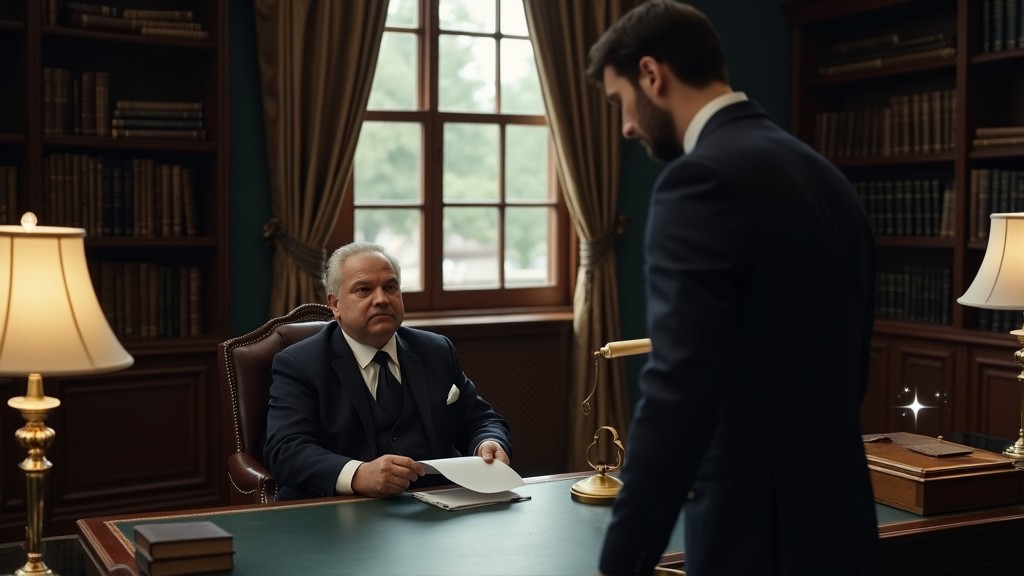
The operations tent was still heavy with the echo of her call sign: Spectre Six. Men who had scoffed at her minutes earlier now avoided her eyes. The silence wasn’t just quiet; it was reverence. General Marcus Steele felt it pressing against him like the weight of a storm. He leaned his fists on the table, the maps beneath his knuckles crinkling under the pressure.
His gaze fixed on Torres, sharp and unforgiving. He had seen reputations swell too fast and men crushed beneath the weight of names they could never live up to. Legends were dangerous. They made soldiers reckless, convinced them someone was invincible, and when that myth shattered, Marines died. Finally, he straightened, his boots thudding as he closed the distance between them.
He stopped just short of her, his eyes locked, his voice cutting the air. «You understand what you’ve just done, Sergeant?»
Torres stood at attention, her shoulders square, her chin lifted slightly. «Yes, sir.»
His jaw tightened. «Legends break men. Marines will expect you to be unbreakable. They’ll believe you can’t fall, and if you do, they’ll fall with you.» The words hung sharp, meant to dig under her armor. Around the tent, Marines shifted uneasily and SEALs leaned forward in their seats. No one dared to speak, but every man listened.
Torres didn’t blink. Her breathing was calm, her eyes steady. She’d heard fear dressed as warnings before. She had lived under it every time bullets cracked past her helmet in Kabul’s alleys. When she answered, her voice was quiet but carved in steel. «Then I won’t break, sir.»
The tent went still again, thicker than before. Even the hum of the generator outside seemed to fade. For a moment, General Steele said nothing. He studied her face the way a battlefield commander studies terrain, looking for weaknesses, hidden fractures, and the signs of a bluff. But what stared back at him wasn’t arrogance or bravado; it was a calm certainty, the kind forged under fire and sharpened by survival.
One of the younger officers glanced at the general nervously, as if waiting for him to strike her down for insolence. Instead, Steele exhaled through his nose, slow and measured. «You think it’s that simple,» he said, but the edge in his voice was softer now. «You think it’s just about not breaking?»
Torres didn’t move. «I don’t think, sir. I know. My Marines are alive because I don’t.»
The response was blunt, stripped of ego, but it hit the room like a thunderclap. The SEAL who had laughed earlier lowered his gaze. A captain near the table pressed his lips together, suddenly aware that the weight of the myth had just been matched by fact. General Steele’s expression shifted almost imperceptibly. The skepticism remained, but beneath it, something else flickered: recognition. It was respect—reluctant but undeniable.
He stepped back, his voice quieter now but carrying farther than before. «Very well, Spectre Six.»
No one moved. No one spoke. The legend wasn’t just a whisper anymore. In that tent, under the gaze of the general himself, it had been acknowledged. Respect had shifted. Permanently.
The silence in the operations tent hadn’t yet lifted when the door flap snapped open. A young lieutenant hurried in, a folder clutched tight under his arm, his face pale beneath the harsh lights. He placed the papers in front of General Steele without a word. Steele scanned the report, his jaw tightening with each line.
Then he looked up, his eyes narrowing on the room. «Recon Bravo’s gone dark,» he said. His voice was even, but the gravity sank instantly into every chest. «Last contact was twenty minutes ago, on the outskirts of Kabul. No comms, no movement. High chance of ambush.» A ripple of unease passed through the gathered Marines and SEALs. Everyone knew what that meant. A silent unit on Kabul’s outskirts wasn’t just lost; it was surrounded.
Steele’s gaze shifted deliberately to Torres. He didn’t raise his voice; he didn’t need to. «Sergeant Torres, you’re on point.» The words dropped like a hammer. A few SEALs traded quick glances, their earlier mockery replaced with unease. They’d heard the whispers and seen her stand toe-to-toe with the general without flinching, but this was different. This wasn’t rumor or briefing-room bravado; this was a test written in blood and dust.
Torres didn’t hesitate. «Yes, sir!» She adjusted the strap of her rifle, stepping forward with the calm precision of someone preparing for another long march. Around her, boots scraped and rifles clicked as Marines and SEALs fell into formation. Doubt lingered in their eyes, but so did something else: a curiosity that bordered on respect.
Outside, the Kabul night was alive with tension. The city hummed in the distance, but the outskirts were darker and quieter, where danger lived behind every broken wall. The convoy moved out under red light, tires crunching on gravel, engines low to avoid attention. Inside the armored vehicle, no one spoke. Torres sat near the door, her helmet tilted slightly down, her eyes closed for a moment of stillness. To anyone else, it looked like calm.
To her, it was calculation. The pattern of enemy fire she had studied before, the blind spots she had crawled through, the rhythm of ambushes in Kabul’s alleys—she mapped them all silently in her mind. When they reached the outskirts, Steele’s voice crackled through the radio. «Spectre Six, lead them in.»
Torres signaled her team forward. They dismounted, boots hitting the dirt, rifles raised. The alleys yawned open before them, dark and suffocating. A single dog barked in the distance, then silence reclaimed the night. The SEAL nearest to her whispered, «Feels like a trap.»
Torres didn’t answer. Her hand went up, signaling a halt. Her eyes scanned the rooftops, the shadows, and the cracked windows that seemed too quiet. She felt it: the shift in the air, the weight of eyes watching. «Positions,» she said quietly, her voice cutting through the comms with steady certainty. The Marines and SEALs moved, trusting her tone more than their own nerves, and then, as if on cue, the night exploded with gunfire.
The first crack of a rifle shattered the silence. A Marine went down hard, his brothers dragging him behind cover as bullets ricocheted off stone walls. Then came the storm. Gunfire erupted from every direction—rooftops, windows, narrow alleys that funneled death into the convoy. «Contact! Snipers left!»
«Top right!» shouted a SEAL, his voice nearly drowned by the roar of automatic fire. The Marines pressed into the dirt, trapped in the choke of cobbled streets. Smoke and dust filled the air as the comms burst with frantic voices. Every rooftop seemed alive with muzzle flashes, the sharp angles of the city turned against them. «Pinned! Exposed!»
There was nowhere to go, but Torres didn’t collapse into the chaos. She pressed her back against a shattered wall, her breathing even. Her eyes swept the battlefield, reading it the way a mapmaker reads terrain: angles, blind spots, timing. There, a damaged wall stood half-collapsed, with just enough handholds to climb.
While others fired blindly, she moved. «Cover me,» she ordered, her voice cutting through the noise like a blade. No one questioned her. They just shifted fire, giving her the window she needed. Torres sprinted low, her boots slamming against broken stone, and then she climbed. One hand, then the next, her body moved with deliberate precision despite rounds snapping close enough to tear the air beside her.
She reached the rooftop edge, rolled silently over, and came up behind the first sniper team. Her rifle barked once—clean, surgical—and the shooter crumpled before he even turned his head. She didn’t linger; she flowed to the next position. Her silhouette vanished into shadow, then reappeared like smoke on the wind, each squeeze of the trigger dropping another enemy, methodical and exact.
Below, the Marines felt the pressure shift. Fire that had caged them seconds ago suddenly faltered. A SEAL glanced up, his eyes widening. He caught a glimpse of Torres—steady, focused, striking from above like the city itself had given her passage. «She’s clearing them,» he muttered, almost in disbelief. One by one, the rooftops fell silent under her precision.
Escape routes opened like doors being unlocked. «Move! Push left!» a Marine shouted, seizing the moment. The squad surged, dragging the wounded, their rifles snapping to cover gaps that had seemed impossible to cross minutes earlier. From above, Torres laid down measured fire, each shot carving a path for her team. There was no panic in her movements and no wasted bullets. Every round meant freedom; every round meant life.
By the time the last rooftop fell quiet, the convoy was still intact. Every Marine was alive—bloodied and shaken, but alive. Torres climbed back down, her boots landing in the dust, her rifle still warm. She said nothing as she rejoined the squad, slipping back into formation as if she hadn’t just shifted the course of the fight single-handedly. The SEALs stared at her, the smirks they’d worn earlier now replaced by stunned silence.
One finally spoke under his breath. «That’s not a rumor. That’s real.» In that moment, the legend of Spectre Six was no longer a whisper. It was undeniable truth.
The convoy rolled back into the base under the dim wash of floodlights. Dust still clung to their uniforms, and the smell of gunpowder clung to their skin. Medics rushed forward, tending to the wounded, but what mattered most was this: every Marine was alive. Every man had walked out of the ambush breathing.








Обсуждение закрыто.