

My brother’s laughter still rings in my ears from that day in the lawyer’s office. «You got the old dump,» he sneered, loud enough for everyone to hear. «I got the empire.»
«Dad’s four million dollar business is mine. You? You got a house that’s falling apart.» The other relatives shifted uncomfortably.

Josh didn’t care. He never did. But what my brother didn’t know, what nobody in that room knew, was what Dad had really hidden inside those old walls.
By the time Josh figured it out, it would be far too late. Dad had played the long game, and I was about to win.
My father died on a Tuesday morning in March. Heart attack, sudden. He was 68 years old, and up until that moment, I thought he’d live forever.
The funeral was held at Riverside Methodist Church in Asheville, North Carolina, the same church where he married my mother 35 years ago. She’d passed six years prior, and I think part of him died with her that day.
I arrived early. The church smelled like lilies and old wood. I sat in the front pew, alone, staring at the closed casket draped in an American flag.
Dad was a veteran. He’d served in Vietnam, came home, and built a printing business from nothing. By the time I was born, it was already thriving. By the time Josh came along three years later, it was a million-dollar operation.
Josh arrived late, naturally. He swept in wearing a $3,000 suit—Tom Ford, probably. He didn’t cry. He shook hands like he was networking at a conference.
I watched him work the room, playing the grieving son while checking his phone between condolences. That was Josh, always performing.
We’d never been close. Growing up, I was the quiet one, the one who liked books and fixing things with my hands. Josh was the star: captain of the football team, homecoming king, Dad’s pride and joy.
Every Sunday dinner, Dad would ask Josh about his sales numbers, his client meetings, his next big deal. He’d turn to me and say, «And how’s the house coming along?» Like my life was just a side project.
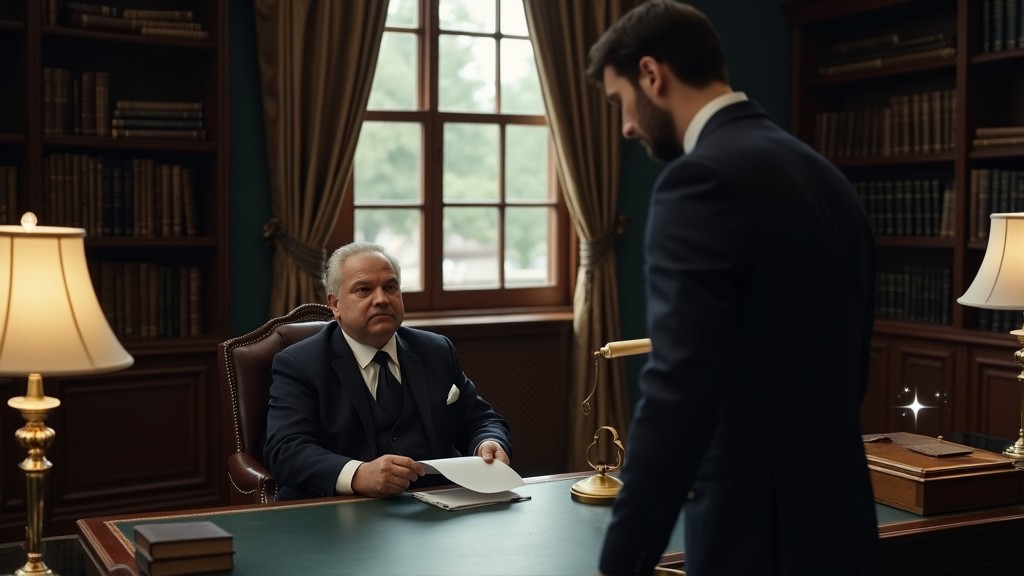
The will reading happened three days later at the office of Morrison & Associates, the estate attorneys Dad had used for decades. The mahogany conference table was too big for just the four of us: me, Josh, Mr. Harrison (the attorney), and Dad’s accountant, Rita.
Mr. Harrison cleared his throat and began reading. The language was formal, legal, cold. Then came the distribution of assets.
«To my son Joshua, I leave my business, Campbell Printing Solutions, including all assets, client contracts, and operations, valued at approximately $4 million.»
Josh leaned back in his chair, grinning. He’d expected this. He deserved it, he probably thought.
«To my son Daniel,» Mr. Harrison continued, and I held my breath. «I leave the family home at 17 Oak Street, Asheville, North Carolina.»
Silence. Then Josh laughed.
Actually laughed out loud. «The old house? That’s it? That place is worth what, $200,000 if he’s lucky?»
He looked at me with something between pity and contempt. «Guess we know who Dad’s real son was, huh?»
I didn’t respond. I just sat there, feeling the familiar sting of being second place. Mr. Harrison looked uncomfortable but said nothing. Rita wouldn’t meet my eyes.
I signed the papers in silence, shook the attorney’s hand, and walked out. Behind me, I could hear Josh already on the phone, telling someone about his inheritance, his empire, his future.
I drove to the old house that night. I hadn’t planned to, but I needed to be somewhere that felt like it still held pieces of Dad. The house sat at the end of a quiet street, lined with oak trees that Dad had planted when I was five.
It was a modest two-story craftsman with a wraparound porch, built in 1952. The paint was peeling. The shutters needed repair. I could see why Josh called it a dump.
But standing there in the driveway, I remembered summer evenings on that porch. Dad teaching me how to use a level, how to read a tape measure, how to fix things instead of replacing them.
I let myself in. The air inside was stale. Everything looked exactly as Dad had left it: his reading glasses on the side table, a half-finished crossword puzzle, the smell of his coffee still faintly lingering.
I walked through the rooms slowly, touching familiar things, remembering a childhood that felt both distant and immediate. His bedroom was upstairs, at the end of the hall.
I stood in the doorway for a long time before entering. The bed was made, military corners, just like he’d always done it.
I started going through his things, not really knowing what I was looking for. Clothes to donate, papers to sort, something to make sense of why he’d given me so little. That’s when I found it.
I was moving his dresser to vacuum behind it when I heard the sound. A hollow thump, different from the solid thud of furniture against drywall.
I knocked on the wall. Hollow. I knocked two feet to the left. Solid. Back to the hollow spot. My heart started racing.






Обсуждение закрыто.