
What would you do if a starving little girl returned your lost wallet, and inside it was a note so heartbreaking it shattered everything you thought you knew about kindness? That’s exactly what happened to Ethan Ward, a thirty-three-year-old billionaire who owned half the skyline of Boston but couldn’t remember the last time he felt alive. He had all the money in the world, yet one crumpled piece of paper from a child he’d never met would bring him to his knees. Stay with this story, because what began as a simple act of honesty would turn into something no one saw coming.
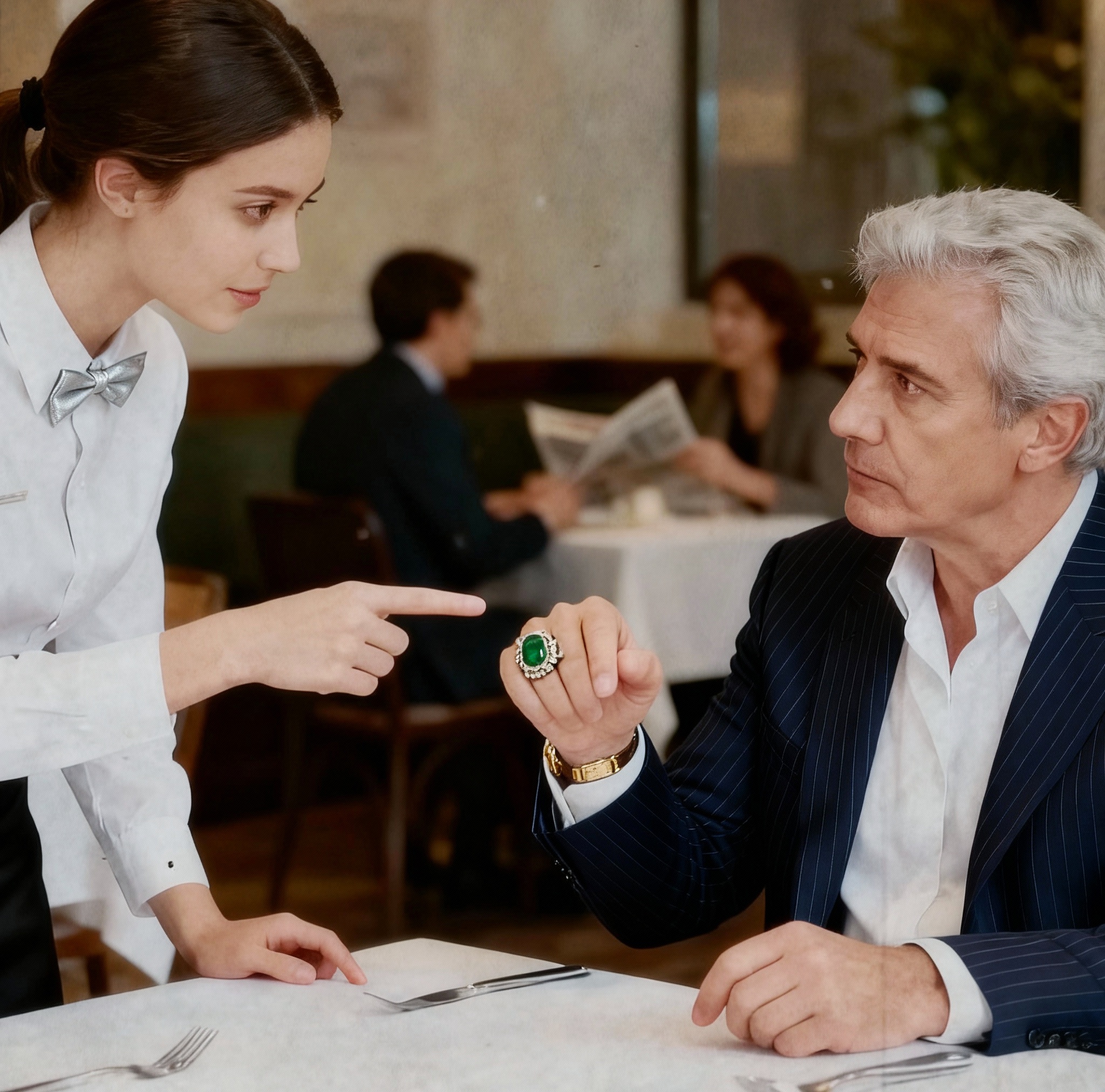
Ethan Ward woke before dawn as he always did in his Beacon Hill penthouse that floated above the sleeping city. Floor-to-ceiling glass framed the skyline like a painting: cold, flawless, and utterly lifeless. His mornings were a ritual of control: black coffee measured to the gram, a silent treadmill run facing the Charles River, and a brief scan of the market reports that told him how many millions his algorithms had made while he slept.
To the world, Ethan was a miracle of modern capitalism, the genius who turned an app into an empire, but to himself, he was just noise and numbers. «Good morning, Mr. Ward,» came the voice of his home assistant. «Your driver will arrive in ten minutes.»
«Breakfast is ready.» He didn’t respond. The table for twelve stood empty except for his untouched meal.
The silence of success was deafening. Later that morning, while his company’s board argued over projections he no longer cared about, Ethan stared out the window of the meeting room, wondering how something so full of light could still feel so gray. He left early, ignoring the confused stares of executives who would later whisper that their boss was «off.»
Maybe he was. All he knew was that for the first time in years he didn’t want another deal; he wanted air. He walked without purpose through Boston’s narrow streets, his tailored suit out of place among the smell of roasted chestnuts and old brick.
On the corner of Myrtle Street, a small bakery caught his eye. Its windows were fogged, its sign faded: «Hale’s Bread and Coffee. Since 1954.»
Inside, the air was warm and real. The man behind the counter, gray-haired and dusted with flour, smiled as if greeting an old friend. «First time here, son?»
Ethan nodded. «Yeah, I guess I just wanted something normal.»
«Then you came to the right place,» the baker said, handing him a mug of coffee so strong it almost burned. It was the best thing Ethan had tasted in years. No PR cameras, no investors, just the hum of life.
For ten quiet minutes, he felt human. He left cash on the counter, thanked the man, and walked out into the crisp evening air. He didn’t notice that his black leather wallet, stuffed with cards, IDs, and at least $3,000, had slipped from his pocket onto the wet sidewalk.
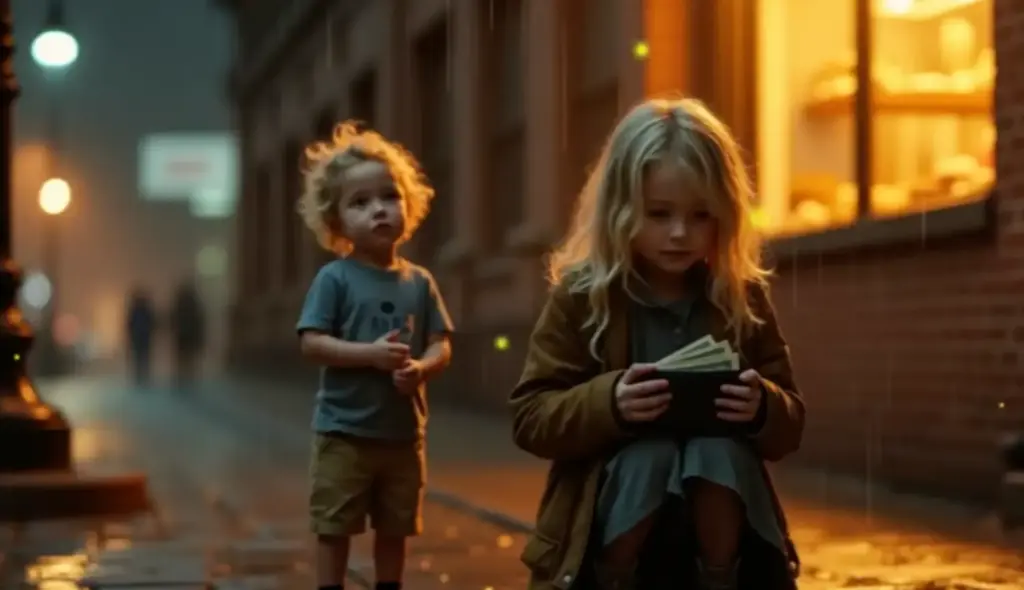
Hours later, as the city lights shimmered in puddles, a little girl named Ella Grace spotted the wallet near the bakery door. She was seven, her coat too thin for the October wind. Her brother Sam, five, clung to her hand, his lips blue from cold.
«Maybe there’s food money,» he whispered. Ella opened the wallet with trembling fingers. The bills inside could feed them for months.
She stared at them, at Sam’s hollow eyes, and then shook her head. «It’s not ours.» But hunger has a voice louder than conscience. After a long silence, she pulled out one bill, a twenty, and tucked it in her pocket.
She found a scrap of notebook paper and wrote in shaky letters, «I’m sorry, my brother was hungry. I took one bill to buy bread. I promise I’ll pay you back someday.» She placed the note on top of the money, closed the wallet, and pressed it against her chest, as if it were a secret too heavy to hold.
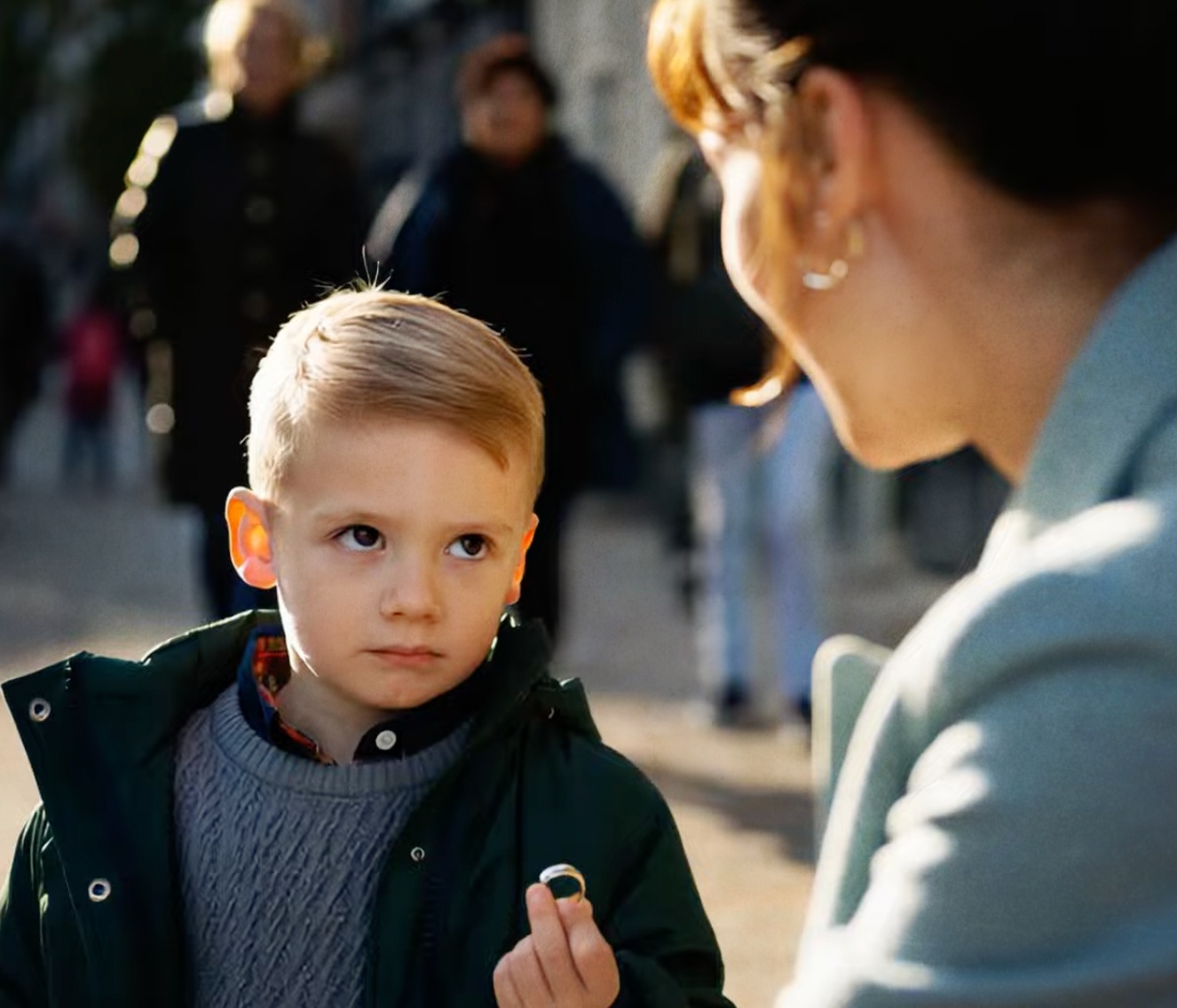
The next morning, Mr. Hale found the wallet on the doorstep, and moments later, he saw a familiar pair of children enter his shop. Ella handed him the wallet and the twenty she had used for bread. «It belongs to someone named Ethan Ward,» she said softly.
«Please give it back if he comes.» Her voice cracked, but her eyes didn’t flinch. The baker watched as she pushed the money toward him.
«I want to pay for the bread,» she added. «That way, I don’t owe anyone.» Mr. Hale took the bill, his throat tight.
«You’re a good girl, Ella,» he whispered, but she was already walking away, clutching her brother’s hand.
When Ethan woke that morning, the world was the same until he realized his wallet was missing. He retraced his steps, irritation rising, until he reached the bakery.
Mr. Hale smiled when he saw him. «I think this belongs to you,» he said, handing over the wallet. Ethan opened it, expecting the usual relief of recovered property, but instead, he found the note.
The handwriting was uneven, the paper smudged, but every word struck him like a hammer. «I’m sorry, my brother was hungry. I took one bill to buy bread.»
«I promise I’ll pay you back someday.» He read it once, twice, a third time. The room blurred. For the first time in years, tears filled his eyes, not the kind born of loss but of revelation.
A child who had nothing had chosen honesty over survival. And he, a man who had everything, had never once done something purely good without expecting something in return. Ethan stood there for a long moment, the note trembling in his hands, until Mr. Hale spoke gently.
«They come by sometimes,» he said. «The little one’s sick. They sleep somewhere on the east side.» Ethan nodded, unable to speak.
He tucked the note back into his wallet as if it were the most valuable thing he owned. «If they come back,» he said, finally, his voice breaking, «tell them I’m looking for them.»
«Not to take anything from them, but to thank them.» And with that, the billionaire who thought he’d seen everything stepped out into the cold streets of Boston, chasing a promise written in a child’s hand, without knowing that this search would change all three of their lives forever.
The next morning, Boston woke beneath a pale winter sun. But for Ethan Ward, the city looked different, stripped of its polish, raw and human. The note still burned in his pocket, every word echoing louder than the morning news or the endless calls from his office.
He had built companies on algorithms that tracked millions of data points. But now, the only thing that mattered was finding one little girl with a paper heart and the courage to write it. He started at the bakery. Mr. Hale, wiping flour from his hands, shook his head.
«They came early yesterday,» he said. «The girl bought bread, paid full price. Haven’t seen them since.»
Ethan left his card, offering a reward if the children returned. But it didn’t feel right. This wasn’t about money.
It was about something deeper. Something his fortune had never been able to buy: meaning. For the first time in years, he canceled his meetings.
His assistant, confused and anxious, warned him about investor calls and media appearances. «Tell them I’m unavailable,» he said simply. When she asked for how long, he replied, «Until I find them.»
He walked through the narrow streets of Beacon Hill, scanning every corner where the light met the shadow. He stopped at shelters, diners, and parks, where the cold wind carried the smell of damp blankets and burnt coffee.
Some recognized the description he gave: a girl about seven, dark hair, brown coat, holding her brother’s hand. But no one knew where they slept. At the women’s shelter on Tremont Street, a volunteer named Mrs. Ramirez looked up from sorting donated coats when Ethan showed her the note.
Her kind face softened. «That handwriting,» she said. «It’s careful, like she was scared to make a mistake.»
She told him that sometimes children like that avoided official shelters; they feared being taken from each other by social services. «If she’s protecting her brother,» Mrs. Ramirez said, «she’ll hide anywhere the world doesn’t look.» The thought cut through Ethan like a knife.
He thanked her, left a donation that could feed the shelter for a month, and kept walking into the gray afternoon. Boston’s elegance faded block by block into quiet desperation. Graffiti walls, rusted fire escapes, and the hum of traffic beneath overpasses where forgotten people tried to stay warm.








Обсуждение закрыто.