
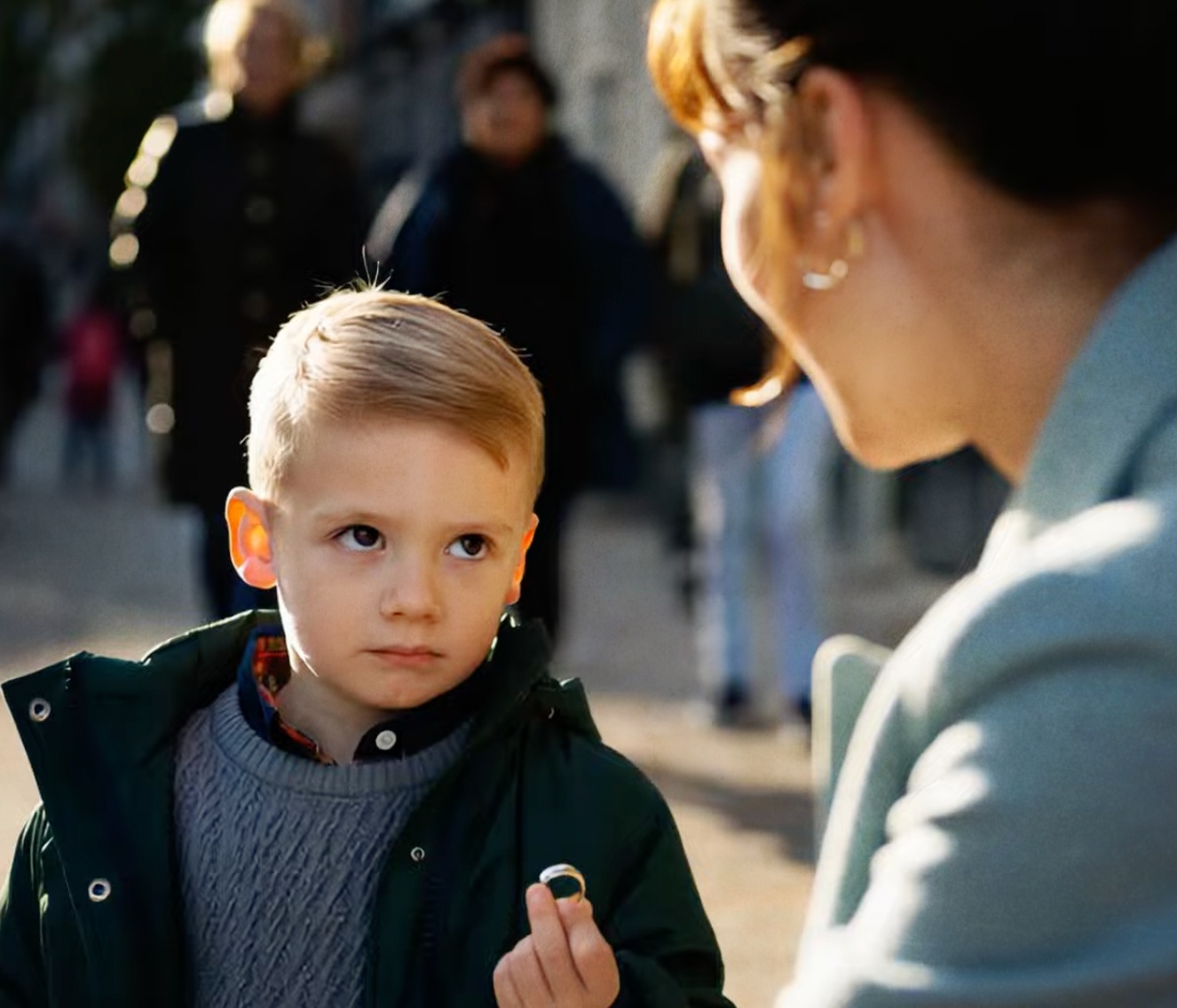
The boys grew. Caleb was all smiles and easy laughter, reaching for everything with chubby hands, fascinated by shapes and patterns. Joshua was more thoughtful, his gaze tracking movements, his tiny fingers clutching at fabric and holding on as if understanding that letting go meant falling.
Vivica talked to them constantly, narrating her life as if they could understand. «We’re going to the store now. We’ll walk because the bus doesn’t come for an hour. It’s good exercise, fresh air. See the leaves? Red and gold. Beautiful things are free.»
She refused bitterness. Some nights, alone after the boys slept, she would feel the weight of what Peter had thrown away, but she never spoke his name to them, never poisoned their minds with her pain. Instead, she told them a story, a different story, a fairy tale.
«Once there was a king who loved a queen. They built a beautiful kingdom together, but a wicked wizard convinced the king that the queen had betrayed him, and the king believed the lie. So the queen had to leave the kingdom, and she was very sad. But she carried with her the most precious gifts the king had ever given her, even though he didn’t know, and she raised those gifts with all the love they both should have shared.»
«What happened to the king?» Caleb asked when he was old enough to understand the story.
«The king lived in his castle alone, wondering if he’d made a terrible mistake.»
«Did he?» Joshua’s voice was always softer, more measured.
Vivica smoothed his hair, choosing her words carefully. «He made a choice based on fear instead of love, and fear always costs more than people realize.»
The boys grew into extraordinary children, despite the poverty surrounding them. Caleb excelled at anything involving numbers, solving puzzles intended for much older children, his mind working in patterns and sequences that left his teachers astonished. Joshua devoured books, writing stories in cramped handwriting on whatever paper he could find, his observations about people and their motivations eerily perceptive.
Vivica worked multiple jobs: a social worker by day, teaching community classes in the evening, and cleaning offices late at night while the boys did homework in break rooms. She was always exhausted, worn thin, but she never let them see her break.
«Why do you work so hard, Mama?» Caleb asked once, watching her ice her swollen feet.
«Because you two are worth every single tired bone in my body.»
«The king in the story,» Joshua said quietly. «Does he ever find out about the gifts?»
Vivica met her son’s eyes, seeing in them a reflection of the man who’d thrown her away. «I don’t know, baby. Some stories don’t have endings yet.» But she knew one thing with absolute certainty. Peter Clark had no idea what he’d lost. And if life had any justice, he would spend the rest of his days drowning in that ignorance. The universe, however, had different plans—plans written in genetic code, waiting in the shadows, counting down to a moment when the past and present would collide with the force of two young hearts simultaneously beginning to fail.
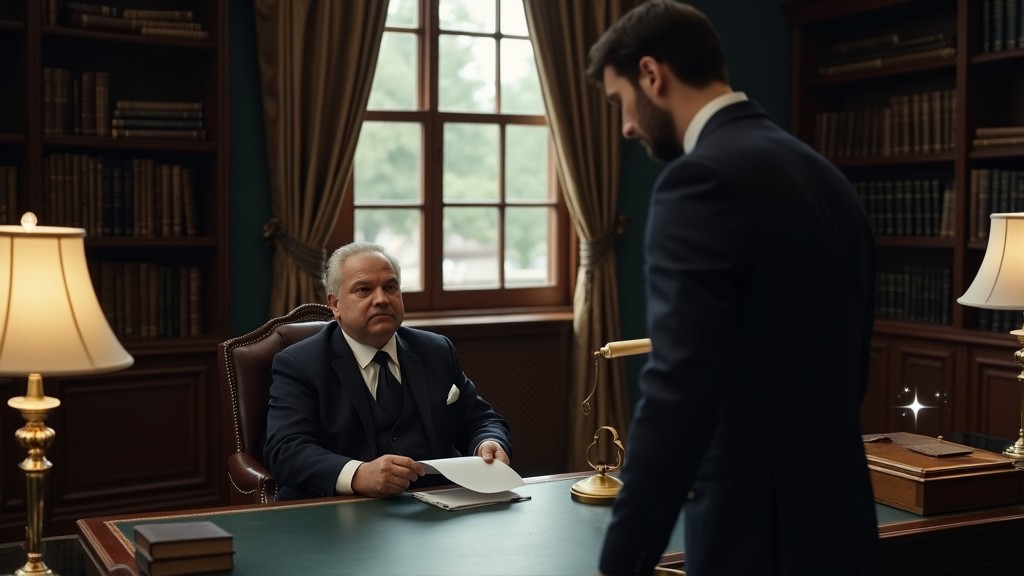
Peter Clark stood in his study, staring at architectural renderings that should have excited him. Another tower, another development, another monument to an achievement that felt hollow at its core.
His assistant knocked softly. «The contractors are here for the final approval meeting.»
«Cancel it.»
«Sir, they’ve been scheduled for weeks.»
«Cancel it,» his voice was flat, distant. «Reschedule for whenever. I don’t care.»
The assistant retreated, and Peter returned to his window, looking out over manicured grounds that resembled a cemetery more than a garden. Everything was perfect, everything dead. The mansion had become a mausoleum—thirty-two rooms, most of them untouched, gathering dust behind closed doors. The cleaning service came weekly, moving through the space like ghosts, careful not to disturb anything in the master bedroom, especially not the reading chair by the window.
It had been Vivica’s chair. She’d spent mornings there with her coffee and whatever book had caught her attention, sunlight turning her skin to bronze, her expressions shifting with the words she read. Peter had never moved it, never allowed anyone to clean it. Sometimes he’d find himself standing in the doorway at dawn, half expecting to see her there, feet tucked under her, that slight smile she got when she read something beautiful. But the chair stayed empty.
His sister, Diane, was the only person who regularly invaded his isolation. She arrived unannounced, letting herself in with the key he’d foolishly given her, and found him in the study pretending to work.
«You look like death.»
«Good morning to you too.»
She sat down, uninvited, studying him with the brutal honesty only siblings possess. «When was the last time you ate a real meal, or slept for more than a few hours, or left this tomb you’ve built for yourself?»
«I’m fine.»
«You’re not fine. You haven’t been fine since you threw away the best thing that ever happened to you.»
Peter’s jaw tightened. «I don’t want to discuss this.»
«Of course you don’t, because discussing it would mean admitting you were wrong.» Diane leaned forward, her voice sharp. «Did you ever find proof, Peter? After all these years, did you ever actually confirm she was unfaithful? The photos were circumstantial at best. You never found receipts for hotel rooms. Never found love letters. Never found a single concrete piece of evidence, because there wasn’t any to find.»
«You don’t know that.»
«Neither do you. But you destroyed your marriage anyway.»
He wanted to argue, but the words died in his throat because Diane was right. Over the years, in moments of terrible clarity, Peter had questioned everything. He had hired investigators long after the divorce was final, trying to find something, anything, that would justify what he’d done. They’d found nothing. Malcolm, the man in the photos, was exactly what Vivica had claimed: a colleague, happily married with three children, with no history of affairs and no connection to Vivica beyond professional collaboration on shelter projects.
The anonymous letters had stopped after the divorce. The photographer had never been identified. Peter had traced the origin of the photos to a disposable email address that led nowhere. And slowly, over months that turned into years, a horrifying possibility had taken root: he’d been played. Someone had wanted to destroy his marriage, and he’d handed them the weapon.
«Did you send those photos?» Peter had confronted his former business partner, Lawrence, after discovering financial irregularities.
Lawrence had smiled, cold and calculating. «Does it matter now? You’re free of her. You can focus on what’s important.» Peter had severed all ties that day, but the damage was permanent.
Vivica was gone. And he had no idea where. He’d tried finding her, hiring the best investigators money could buy. But Vivica Spencer had vanished completely, leaving no trail, no forwarding address, nothing. It was as if she’d been erased from existence. The videos remained on his phone. He’d watched them late at night, whiskey burning his throat, her laughter filling the empty study. Their wedding. Their honeymoon. Mundane moments of her cooking breakfast, making terrible jokes, dancing in the kitchen to music only she could hear.
«You’re watching them again,» Diane said, recognizing the hollow look in his eyes.
«I can’t help it.»
«Then do something about it. Hire better investigators. Put up billboards. Something other than slowly dying in this house.»
«What’s the point? Even if I found her, what would I say? ‘Sorry I ruined your life based on lies. Sorry I threw you away like trash.’ She’d be right to spit in my face.»
«Maybe. But at least you’d have tried.»
Peter said nothing, because the truth was more pathetic. He was afraid. Afraid of confirmation that she’d moved on, found happiness, built a life that didn’t include him. Afraid of seeing in her eyes the complete absence of feeling, which would be worse than hatred. So he stayed in his mansion, surrounded by wealth that meant nothing, attending meetings out of habit, making decisions that affected thousands while unable to manage his own existence.
His bedroom was the worst. He’d kept everything exactly as it was. Her clothes still hung in the closet. Her books remained on the nightstand. Her pillow stayed on her side of the bed. And Peter never touched it, sleeping on his side, staring across the vast, empty space that might as well have been the Grand Canyon.
«You didn’t lose her,» Diane said, standing to leave. «That would imply it was beyond your control. You threw her away, Peter. You chose pride over trust. That’s worse than loss. That’s voluntary destruction.»
After she left, Peter walked through the mansion, really seeing it for the first time in years. The dining room where they’d never eaten, too formal, too cold. The living room with furniture no one sat on. The kitchen that prepared food for one person in a space designed for families. His footsteps echoed on marble floors, and he realized Diane was right. This wasn’t a home. It was a monument to absence, a shrine to everything he’d destroyed.
In the garage, his collection of vehicles sat unused. Sports cars, luxury sedans, a vintage motorcycle he’d bought, thinking it would make him feel young again. He couldn’t remember the last time he’d driven any of them. He selected one at random, some expensive machine, and drove with no destination, just movement. The roads passed in a blur, and he found himself in neighborhoods he’d never seen, where children played in streets and families gathered on porches, where poverty and joy somehow coexisted.
He stopped at a park, watching a woman push twin boys on swings. They were laughing, shrieking with delight, while the mother smiled with exhaustion and love. Peter felt something crack inside his chest. That could have been his life, should have been his life. Children, laughter, a purpose beyond the accumulation of meaningless achievements. He drove home as darkness fell, returning to his mansion that blazed with lights but offered no warmth.
Inside, he poured whiskey he wouldn’t drink and stood at the window of his study, looking out at nothing. Tomorrow would be the same, and the next day, and the next—an endless succession of identical moments stretching toward a grave he would reach having accomplished nothing that mattered. Peter Clark, master of the material world, stood alone in his empire of dust and wondered how a man could be so wealthy and so bankrupt at the same time. The answer, of course, was simple. He’d gambled everything on pride and lost the only thing worth keeping.
And somewhere in the world, his former wife was either flourishing or drowning, and he would never know which, because he’d forfeited the right to ask. But the universe keeps accounts that human beings don’t see, and Peter Clark’s debt, compounded over years with interest paid in regret, was about to come due in the form of a phone call that would shatter whatever remained of his carefully constructed numbness.
The gymnasium smelled like teenage sweat and ambition. Joshua Spencer moved down the court with fluid grace, his movements economical and purposeful. Community basketball wasn’t about competition for him; it was about the rhythm, the way the game forced him into the present moment, away from the stories constantly running through his head.
Caleb watched from the bleachers, simultaneously timing his brother’s sprints and calculating optimal angles for three-point shots. His notebook was filled with equations and observations, transforming the game into mathematics, finding patterns in the chaos. Vivica sat beside him, proud and tired, having just finished an overnight shift at the Crisis Center. Watching her sons had become her meditation, these two extraordinary young men who’d grown from nothing into everything.
The ball arced toward Joshua. He caught it mid-stride, pivoted, and then stopped. Just stopped. His hand went to his chest. His face changed. The ball dropped from his fingers, bouncing away forgotten as Joshua’s knees buckled.
Vivica was moving before he hit the ground, her mother’s instinct faster than thought. She reached him as he collapsed, his body convulsing, his eyes rolling back.
«Someone call an ambulance!» Her voice cut through the sudden chaos, steady despite the terror clawing at her throat. Caleb was already on his phone, his hands shaking but his voice clear, rattling off their location and his brother’s symptoms to the emergency operator.
The ambulance arrived in what felt like both seconds and centuries. Paramedics swarmed Joshua, asking questions Vivica answered on autopilot while her mind screamed denials. This wasn’t happening. Her son was healthy. Her son was strong. This was a mistake, an anomaly, something explainable and fixable.
The hospital emergency room was controlled pandemonium. Doctors barked orders. Machines beeped urgently. Joshua was wheeled away behind swinging doors that closed in Vivica’s face, separating her from her son. And she felt a primal rage at the barriers, at her helplessness, at the universe for daring to threaten her child.
Caleb stood beside her, silent. His mind was already racing through possibilities, calculating odds he didn’t want to face.
«Are you his mother?» a doctor appeared, young but tired, wearing the expression medical professionals adopt when delivering bad news.
«Yes. What’s wrong with my son?»
«We’ve stabilized him, but I need to run some tests. Has he ever had chest pains? Shortness of breath? Dizzy spells?»
«No, nothing. He’s healthy. He’s an athlete.»
The doctor nodded, but his eyes said he’d heard that before. «I’ll have more information soon. But Mrs. Spencer, I need you to prepare yourself. His heart rhythm is severely irregular. We’re looking at something significant.»
The tests took hours. Vivica and Caleb sat in a waiting room where time moved differently, stretching and contracting, where every opening door might bring salvation or devastation. Finally, a cardiologist appeared, older, with gray hair and eyes that had seen too much death. He sat down, which was never a good sign.
«Your son has hypertrophic cardiomyopathy. It’s a genetic condition where the heart muscle becomes abnormally thick, making it harder for the heart to pump blood. In Joshua’s case, it’s advanced. He’s in acute heart failure.» The words landed like physical blows. Vivica’s hand found Caleb’s, gripping it tight.
«What does that mean? Treatment? Surgery?»
«No, it means his heart is working at a fraction of its normal capacity and is deteriorating rapidly. Standard treatments aren’t options here because of the specific genetic markers involved. We need to look at cellular therapy, stem cell transplantation from a biological parent to essentially rebuild the damaged tissue.»
Vivica processed this, her medical training kicking in despite her panic. «My cells. Test mine.»
«We will. But there’s something else.» The cardiologist looked at Caleb. «This condition is hereditary. Given that you’re his twin, there’s a very high probability you have it too.»
Caleb’s face went pale. «I feel fine.»
«For now. But if you have the same genetic markers, your heart is likely in the early stages of the same deterioration. We need to test you immediately.»
The next hours became a nightmare of needles and scans. Caleb was poked, prodded, and imaged, his body scrutinized for the invisible killer hiding in his genetic code. The results confirmed everyone’s fears. Both twins carried the mutation. Both were dying, just at different speeds.
Vivica’s test results came back after an agonizing wait. The cardiologist’s face told her everything before he spoke. «I’m sorry, Mrs. Spencer. Your cells aren’t compatible. There’s a chromosomal mismatch that makes you an unsuitable donor. It’s rare, but it happens.»
«Then find another donor. There must be a registry. Someone compatible.»
«The genetic markers are too specific. They inherited this from their father. We need his cells. The DNA match has to be nearly exact for this therapy to work.»
The room tilted. Vivica heard the words but couldn’t process their implications.
«Their biological father,» the cardiologist continued gently. «Is he available? Willing to be tested?»
Caleb and Joshua, lying in adjacent beds in the ICU, looked at their mother with questions they’d never asked but always wondered.
«We have a father?» Joshua’s voice was weak, confused.
«You always said he was gone,» Caleb added. «That he left before we were born.»
Vivica had never lied to her sons, only omitted the parts too painful to explain. And now those omissions had become a crisis. «Your father doesn’t know you exist,» she said quietly. «He never knew I was pregnant. We separated before I found out.»
«Then find him.» Joshua’s monitor beeped urgently, his stress affecting his already compromised heart. «Please, Mama. I don’t want to die.»
Those words shattered something fundamental in Vivica. Her son, asking for life from a man who’d destroyed hers. That night, after the boys finally slept under sedation, Vivica sat in the hospital chapel. Empty pews, dim lighting, the weight of an impossible choice. She’d sworn she would never contact Peter Clark again, had built a life specifically to avoid ever needing him, had raised two sons to be whole without a father because fathers could be poison, could be absence, could be the thing that ruins you.
But now those sons were dying. And their cure lay in the genetics of the man who’d thrown her away like garbage. Her phone sat in her lap. His number was still stored after all these years, kept not out of hope, but out of some masochistic need to remember what not to believe in. Her finger hovered over the call button.
If she made this call, Peter would learn about the sons he’d never known. He would have power over their survival. He could refuse, could demand things, could insert himself into the life she’d carefully constructed without him. But if she didn’t make this call, her sons would die. And all her pride, all her justified anger, all her carefully guarded independence would mean nothing if Caleb and Joshua weren’t alive to benefit from it.
Vivica pressed the button before she could reconsider. The phone rang once, twice, three times. She almost hung up, almost chickened out, almost chose pride over her children’s lives. Then a voice answered, unchanged by time, familiar as her own heartbeat. «Hello?»
Vivica’s mouth went dry. Her prepared speech evaporated. All that remained was raw and desperate truth. «Peter,» she managed. «I need to tell you something about eighteen years ago.»
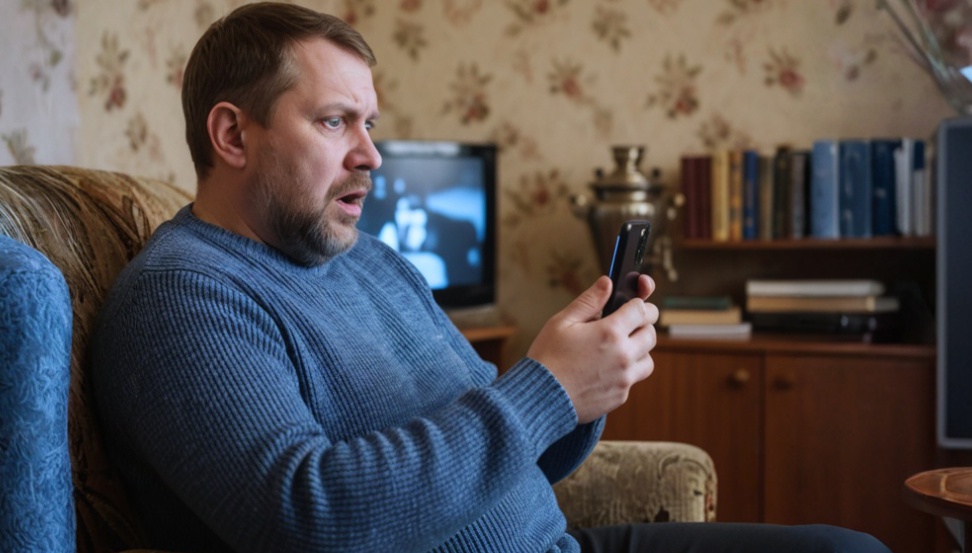
Peter Clark sat in his study, staring at spreadsheets that blurred into meaningless numbers when his private cell phone rang. Unknown number. He almost declined, but something made him answer. «Hello?»
Silence. Then breathing. Then a voice he’d never forgotten, despite trying desperately to do so. «Peter, I need to tell you something about eighteen years ago.»
His heart stopped. Actually stopped for a moment, before slamming back to life with painful force. The spreadsheets, the walls—everything dissolved. There was only her voice. Older and tired, but unmistakably Vivica’s.
«Vivica.» Her name left his mouth like a prayer and a curse combined.
«I wouldn’t call if there was any other option.» Her voice was controlled, clinical, deliberately empty of emotion. «I need you to listen without interrupting. Can you do that?»
He couldn’t speak, could only make a sound of acknowledgment.
«When I left you, I was pregnant. Two months. I didn’t know at the time. I found out three weeks after the divorce was final.» The world tilted. Peter gripped the edge of his desk, knuckles white, the phone pressed so hard against his ear it hurt. «You have sons. Twins. Their names are Caleb and Joshua. They’re seventeen. And they’re dying.»
Each word was a bullet. Peter’s vision darkened at the edges. «They have a genetic heart condition. It came from you. Their hearts are failing. And the only treatment that can save them requires stem cells from their biological father. I need you to come to City General Hospital. I need you to be tested. I need you to help save the children you never knew existed.»
«I have sons?» Peter’s voice broke on the words. «You kept my sons from me for seventeen years?»
«Eighteen years,» she corrected coldly. «And yes. I kept them from a man who accused me of betrayal without proof. Who threw me out of his house. Who chose suspicion over love. I kept them from that.»
«You should have told me.»
«Why? So you could look at them with the same doubt you looked at me? So you could poison them with your paranoia? So they could grow up knowing their father thought their mother was a whore?»
The accusation hit like a physical blow. Peter wanted to argue, to defend himself. But the justifications died in his throat because she was right. He’d been cruel. He’d been wrong. And now there were consequences he’d never imagined.
«Are they…?» He couldn’t finish the question.
«They’re in the ICU. One of them collapsed during a basketball game. The other has the same condition in its early stages. Without treatment, they’ll both be dead within months.»
Peter stood abruptly, his chair crashing backward. «I’m coming. Right now. I’ll drive.»
«No,» her voice turned sharp. «You’ll hire a car service. You’ll arrive sober and rational. Because if you show up intoxicated or emotional and disturb my sons while they’re fighting for their lives, I will have security remove you, and your cells be damned. I will find another way.»
«Vivica…»
«Do you understand?»
«Yes. City General. Main entrance. Ask for Dr. Reeves in cardiology. He’s expecting you.» She paused, and he heard something crack in her controlled facade. «Peter, I’m not asking for us. I’m not asking for forgiveness or explanations or anything to do with what you destroyed. I’m asking for them. They’re innocent in all of this. They deserve to live.»
«I know.»
«Do you? Because once you walk through those hospital doors, you can’t unsee them. You can’t pretend they don’t exist. They’re real, Peter. They’re brilliant and kind and everything good that we might have been together. And if you help save them and then disappear back to your mansion, I will make sure they never forgive you for that abandonment either.»
«I won’t disappear.»
«You don’t get to make promises anymore. You lost that right when you called me a liar and threw me away.» Her voice finally broke. «Just come. Just be tested. Just do this one thing right in the middle of everything you did wrong.»
The line went dead. Peter stood frozen, phone still pressed to his ear, listening to the silence. Then he moved, grabbing his jacket, his wallet, his keys, before remembering her instruction about a driver.
He called his assistant at home, waking him. «I need a driver. Now. City General Hospital. It’s an emergency.»
«Sir, it’s nearly midnight.»
«Now!»




Обсуждение закрыто.